
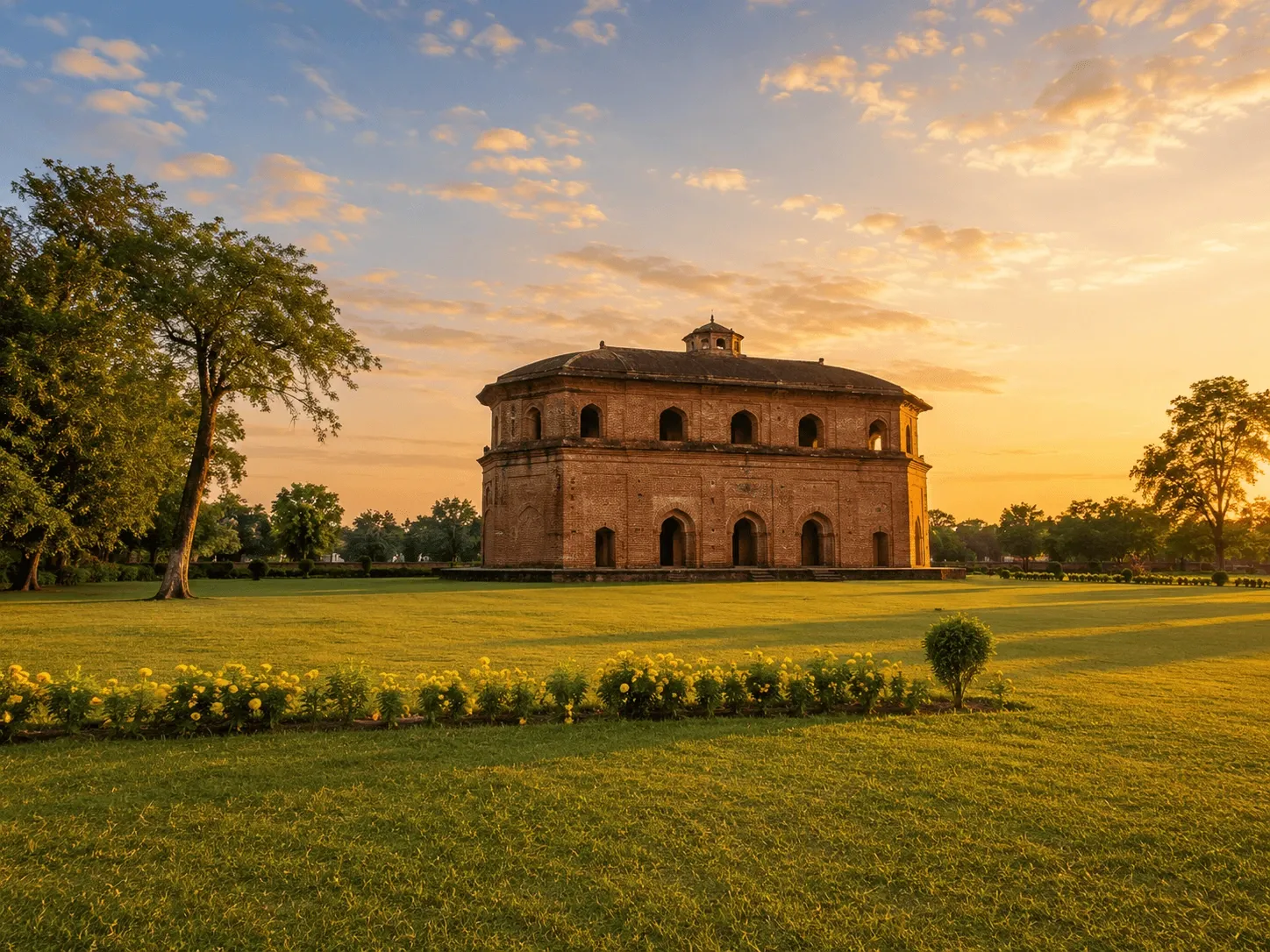
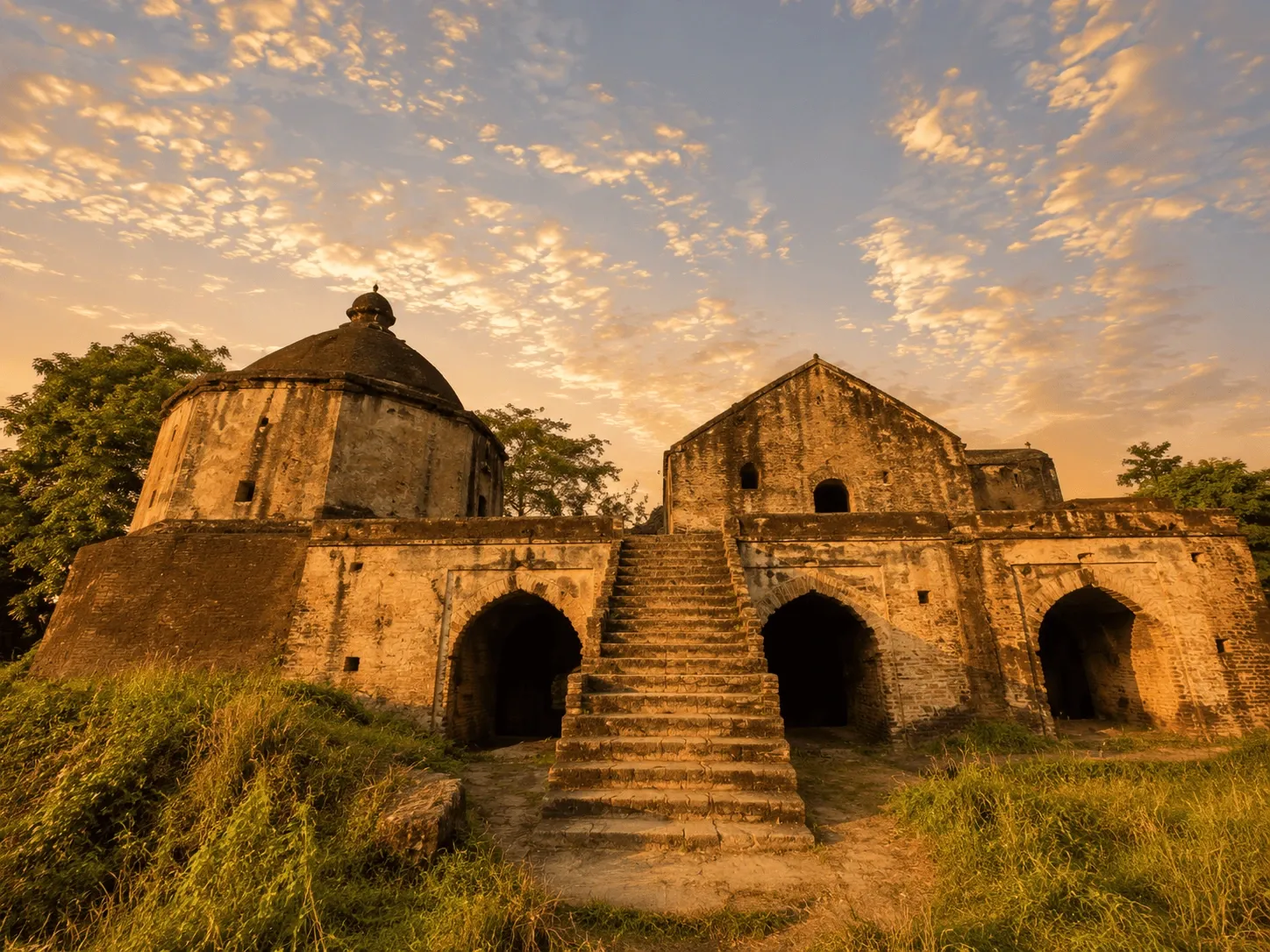
Rang Ghar is one of Assam's most iconic Ahom monuments and a highlight of the Sivasagar heritage circuit. This royal pavilion is remembered as a place from which rulers once watched games, performances, and festive gatherings.
Rang Ghar
An iconic Ahom-era pavilion in Sivasagar where royal spectators once watched games, festivals, and public spectacle
A Glimpse into the History of Rang Ghar
Built Under Ahom Royal Patronage
Rang Ghar was built during the Ahom period under Swargadeo Pramatta Singha in the eighteenth century. Its purpose was not defensive or residential. It was created as a royal viewing pavilion from which the king and nobles could observe sports, performances, and festive gatherings.
Linked to Bihu and Public Spectacle
The monument came alive especially during Rongali Bihu and other occasions when traditional games, performances, and community gatherings were held in the open grounds nearby. This gives Rang Ghar a special place in Assamese memory, because it connects architecture with festival culture rather than only with palace life.
An Enduring Symbol of Assamese Heritage
Today Rang Ghar is valued not only as an architectural remnant but also as a symbol of Ahom cultural confidence and Assamese identity. Visitors often remember it immediately because its form is unusual, elegant, and easy to connect with the idea of a royal public life that once centered around Sivasagar.
Significance of Rang Ghar
Rang Ghar is significant because it represents a different side of royal architecture. Unlike temples or palaces, it was built around public viewing, ceremony, and entertainment. That makes it one of the most distinctive monuments in Assam's heritage landscape. It is often described as one of Asia's oldest surviving amphitheatre-like structures, and for many visitors it becomes the clearest reminder that the Ahom rulers invested not only in power and worship, but also in organized public culture.
Festivals and Seasonal Experiences Around Rang Ghar
Rongali Bihu Heritage Mood
Rang Ghar is closely associated in public memory with the festive season of Rongali Bihu, when traditional games and performances evoke the monument's original spirit. Even if the structure is no longer used in the old royal way, visiting around this cultural season helps travelers imagine the site as a place of spectacle rather than a silent ruin.
Winter Heritage Visits
The cooler months are the best time to visit Rang Ghar because the open grounds and monument area are much more comfortable to explore. This also makes it easier to combine Rang Ghar with Talatal Ghar and nearby Ahom sites in a single day.
Special Highlight: The Royal Viewing Pavilion Design
What makes Rang Ghar stand out immediately is its purpose-driven shape. It was meant to watch, to gather, and to overlook public performance. That gives it a very different feeling from a fort or temple. Even for travelers who are not deeply familiar with Ahom history, Rang Ghar is easy to connect with because the monument visually tells you it was built for spectacle.
Travel Guide to Rang Ghar
How to Reach Rang Ghar
By Air: Jorhat Airport is the nearest practical airport for most visitors heading to Rang Ghar through Sivasagar. Dibrugarh Airport is another realistic option for travelers planning a wider Upper Assam heritage circuit.
By Train: Simaluguri Junction is the nearest major railway junction and is commonly used by travelers going to the Sivasagar heritage sites. Sibsagar Town station also serves the area, but Simaluguri remains the more practical rail gateway for many routes.
By Road: Rang Ghar is near Sivasagar town and can be reached easily by local taxi, auto, or private vehicle once you are in the town area. It is one of the easiest monuments to include in a short Sivasagar heritage route with Talatal Ghar and other nearby sites.
Best Time to Visit
The best time to visit Rang Ghar is from October to March, when the weather is more comfortable for walking around open monument grounds and combining multiple heritage sites in the same outing. This season also makes photography and relaxed exploration easier.
Local Attractions
Talatal Ghar: One of the nearest and most important Ahom monuments to pair with Rang Ghar in the same outing.
Kareng Ghar: A realistic heritage stop in the same Sivasagar circuit for travelers interested in royal architecture.
Joysagar: A major historic tank and heritage area that fits naturally into the Rang Ghar route.
Tips for Devotees and Travelers
Visit early in the day if you want quieter monument grounds and a more comfortable heritage walk in the open area around the structure.
Keep extra time for photography and slow observation, because Rang Ghar is one of those monuments whose shape and details are best appreciated from multiple angles.
Carry water and light sun protection because the site is open and can feel warm by late morning, especially outside winter.
If you are planning Talatal Ghar and other nearby sites on the same day, arrange your local vehicle in advance so the heritage circuit stays smooth and practical.
Monument Location
Image Gallery
Nearest Places to Visit
Talatal Ghar
Kareng Ghar
Joysagar
Siva Dol